The Path to Understanding My 3G Legacy
By Lisa Gold
3GMI Founder and Speaker
I consider myself to be the caretaker of our family history. Learning about and holding our history has informed many of the choices I’ve made in my life. It contributed to my desire to become a clinical social worker, and to practice with the understanding that community is essential to managing mental health and processing trauma.
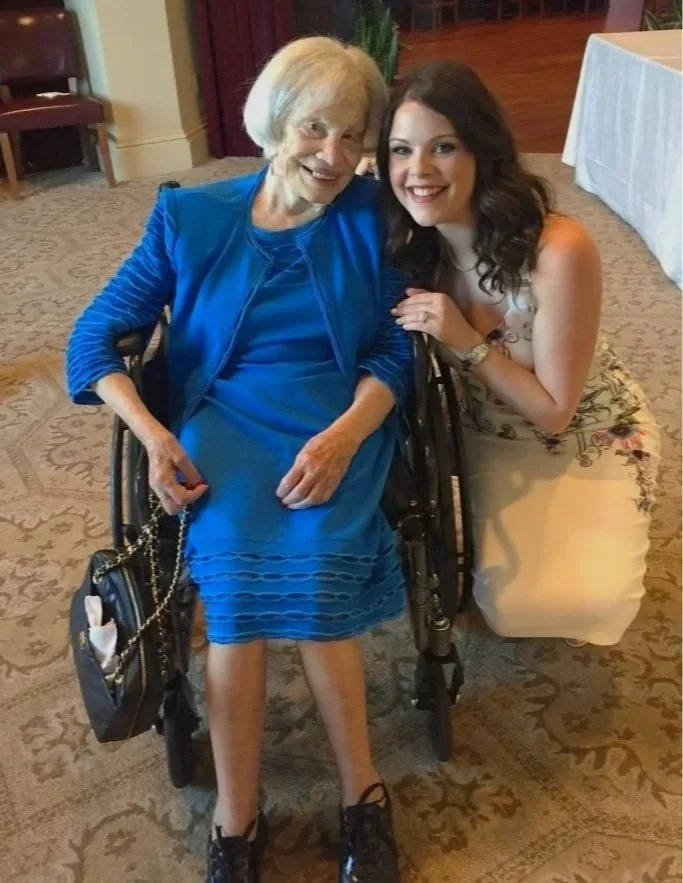
Lisa and her Grandmother, Sara Shapiro
I’ve written papers on and analyzed the effects of intergenerational trauma on my dad and his brothers, and on me and mine. I’ve done a lot of work to un-process, and then re-process my own intergenerational trauma to turn it into intergenerational growth. Telling my grandparents’ stories helps me continue that process, so when I found out about 3G Speaker Training, I knew that I needed to join the program.
I always knew that my grandparents, Sara and Asa Shapiro, were Holocaust survivors, but I didn’t fully comprehend what that meant until I was fourteen and went with my family to the Holocaust Museum in DC.
A docent at the museum encouraged my grandmother to tell me her story, and I remember exactly where we were when she started speaking.
That was when I truly understood that my grandmother was a survivor. She was resilient, and I realized then that if anything like that were to happen to me, her survival is in my blood.
Both of my paternal grandparents were Holocaust survivors. They were both Jews from Koretz, a small town in Poland, which is now part of Ukraine. This is my grandmother’s story.
When the Nazi invasion took over Koretz, my grandmother was only eight years old. Her entire extended family of about sixty people were murdered in the city’s first Pogrom that targeted Jews. My grandmother and her parents and brothers were sent into a ghetto.
Soon after, they secured a spot of safety for my grandmother and her older brother to go and hide in a barn in the next town over. When they arrived, it was apparent that the town was no longer safe, and that they were not welcome there. My grandmother had to split from her brother, and at nine years old she was completely alone.
She walked on her own for three days, passing through many cities and ending up in Dachanau. She met two farmers who found work for her, and introduced herself under the false identity of a school friend that she knew wasn’t Jewish. She made up her backstory, saying ‘Hi, my name is Manya Romanchuk. My mother died, and my father remarried, and my step-mother hates me, so I’ve run away and am just looking for work’ The fact that she thought of that at just nine years old, and so instinctively, has always blown me away.
She hid in plain sight for the four years that she was with the farmer and his family. She was their slave, working just for bread, and she endured physical, emotional, and sexual abuse throughout. They were always trying to confirm that she was not a Jew. They’d test her by giving her a plate full of pork and watching for her reaction. My grandmother kept kosher, had never even touched pork before the war, but she never hesitated to eat that plate clean. Anything to continue to survive.
—
Carrying my grandparents’ stories forward has always been on my mind. Initially, if only to be able to share my grandparent’s story with my children and nieces and nephews, who have heard lots about their great-grandparents but don’t yet know that they were Holocaust survivors. They’re young now, but I felt like I needed to learn how to share that part of their story, and that was my main intention when I signed up for 3G Speaker Training.
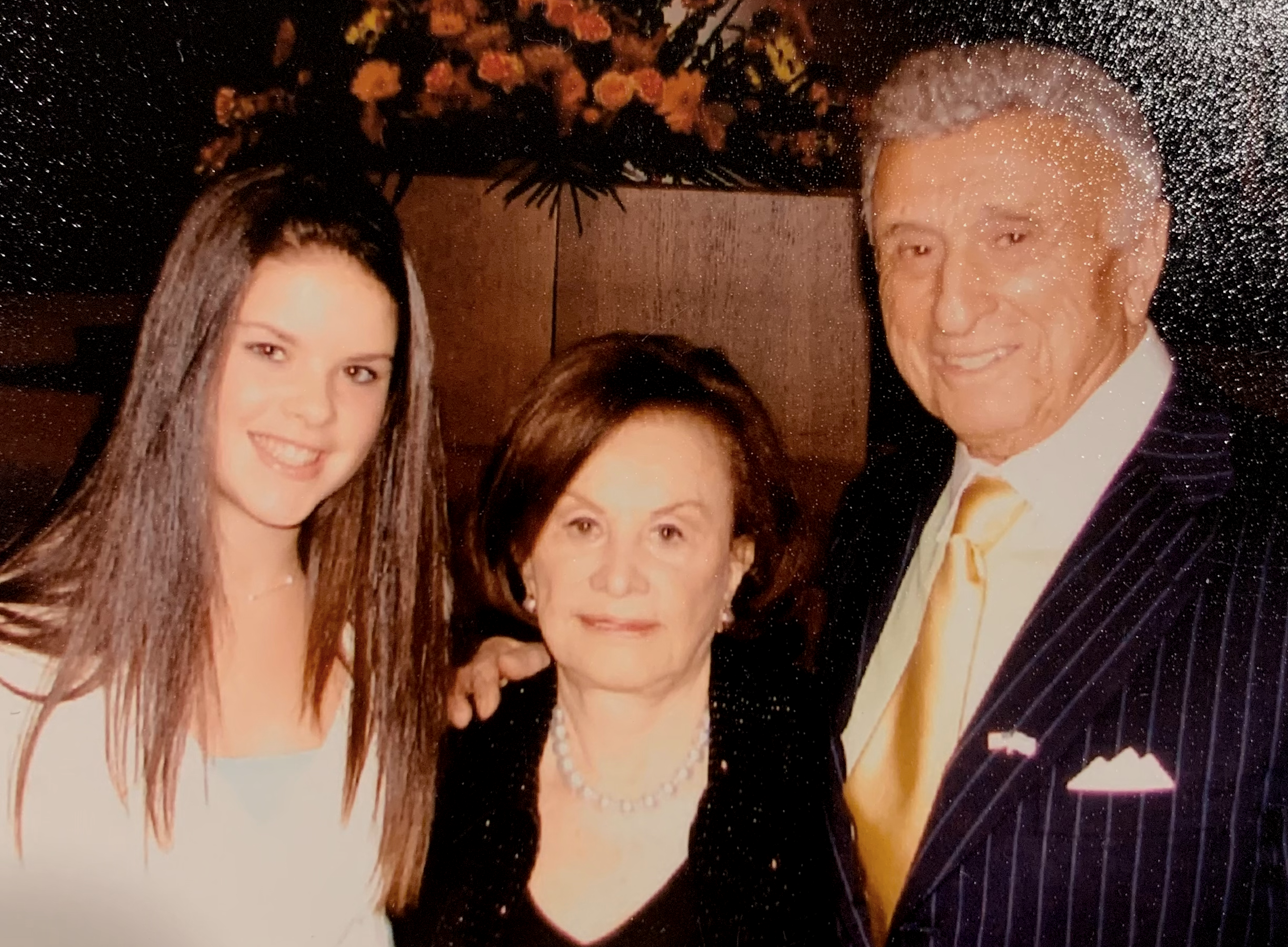
Everything changed when I took the course, between the self-discovery I experienced, and the connections I made with other 3Gs in my cohort. We would talk about our grandparents and how many of them could have easily crossed paths. It felt beshert and magical, and led to me deepening my involvement and founding 3G Michigan.
Now, when I share my grandmother’s story in schools, it’s an out of body experience. It’s important to me that I can spread my grandmother’s story on her behalf, to put her face to the word “Holocaust”.
When I speak to students, I want them to take away from my presentation that what happened to my grandmother could happen to anyone. I emphasize that it only happened for the one fact that she was Jewish. I talk about the importance of being an upstander versus a bystander, that sticking up for one person being teased or isolated can make all the difference. I want them to understand that just by helping someone go from feeling scared and alone to feeling welcomed and supported, they’ve become a part of that person’s own survival.