
WHY WE REMEMBER
THE STRENGTH OF SISTERS
A Holocaust Survival Story
Download this as a PDF
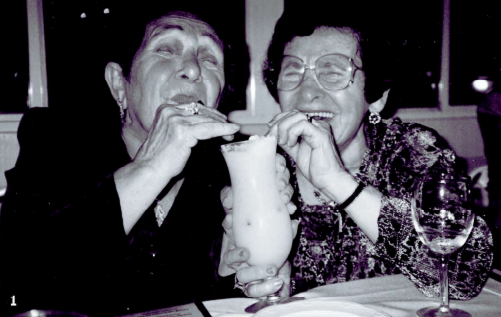
Lonka Königsberg was born on December 15, 1926, in Jarosław, Poland, a beautiful town filled with parks, movie theaters, concerts, and kind neighbors. Her parents, Gitla and Simon, owned a candy shop where Lonka and her sister, Janina, helped make coconut balls and Christmas candies to sell.
WHEN LIFE WAS SWEET
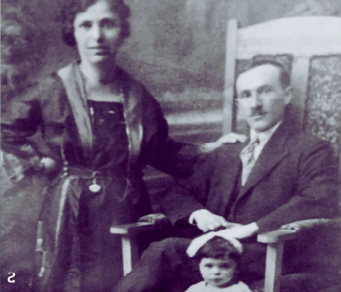
Life was warm and full of tradition, with Friday night Shabbat dinners, Passover seders, and joyful Purim parades through town. Lonka loved to sing, dance, and play volleyball. As a teenager, she joined a Zionist youth group that hiked and camped in the mountains and dreamed of one day reaching the Land of Israel.
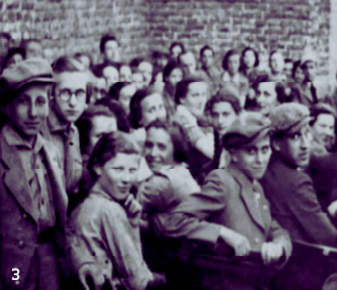
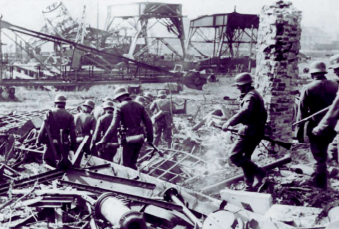
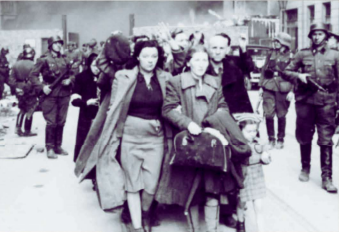
Even as antisemitism grew and Polish classmates mocked Jewish students, Lonka stayed hopeful and worked hard in school, imagining a future where she would someday study agriculture. In September 1939, German tanks rolled into Jarosław in the middle of the night. Jewish shops were looted, Jews were beaten and murdered, and life changed overnight.Soon after the invasion, Germany and Russia divided Poland between them. During one attack, Lonka and her father fled under gunfire to stay with relatives on the Russian side. Gitla and Janina remained behind for a short time to pack their belongings with their housekeeper's help, but one day they returned home to find that she had stolen all of their valuables. Not long after, Janina was able to join her father and sister. Weeks later, Gitla set out to reach them as well. At the border, German soldiers stopped her and ordered her at gunpoint to cross a river by wading through the freezing water instead of allowing her to walk safely over the bridge. Against all odds, she reached the other side and was eventually reunited with her family.
ON THE RUN
For two years, the family survived in the small town of Krakowiec, opening a grocery and learning Russian. But when Germany turned against Russia, rumors spread that Jews would soon be forced into ghettos. At only fourteen, Lonka and her sister, who was seventeen, were told by their parents that they had to flee. On the day they left, their mother said, "just go wherever your eyes take you".The sisters reached the town of Zamość about fifty miles away. To survive, they pretended to be gentile Polish girls by singing Polish songs and blending in with Catholic workers. One day, they saw a line of girls being examined before boarding a train for jobs in Germany. They slipped into the line, boarded the train, and soon befriended two Ukrainian girls.
In early 1943, two women in the factory grew suspicious and reported them to the SS. Lonka and Janina were arrested and brought to a local office, where an officer told them to turn around, preparing to shoot. At that moment, the phone rang. A voice on the other end said, "don't waste the bullet". A train to Auschwitz was leaving the next day, and they were looking for young workers.
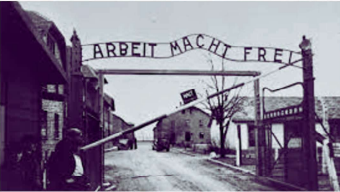
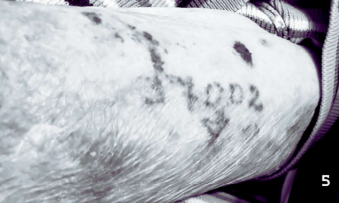
The next morning, the sisters were packed into a cattle car with no food or water. After several days, the doors opened in the darkness. Dogs barked and soldiers shouted as the sisters were driven into Birkenau, part of the Auschwitz complex. Their hair was shaved, and their names were replaced with tattooed numbers and a triangle that marked them as political prisoners. Even standing side by side, they could barely recognize each other.
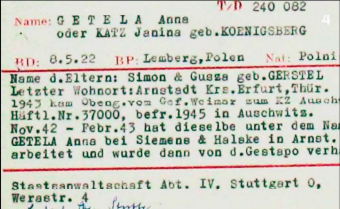
After a few stops, they asked to see the girls' identity papers. When the train slowed, the sisters pushed the girls off the train and escaped with their documents. From that moment on, Lonka and Janina lived as Stefania Pitip and Anna Getela. They hid in plain sight for months while working in a radio factory in Bavaria.
STAYING ALIVE, TOGETHER
The sisters were sent to barracks made of bare wooden planks, with no blankets, no toilets, and almost no food. Every morning, prisoners were chased outside for roll call. The camp was filled with smoke and screams from the crematorium; everyone knew that those taken there never returned. Lonka was assigned to work inside the barracks, cleaning and lining up girls for inspection. To survive, she acted tough and sometimes pretended to strike others so she would not be punished.
When Janina fell ill with typhus and was sent to the hospital, Lonka feared she would be taken to the gas chambers. Risking everything, she bribed guards, slipped away, and found the outside wall of the hospital. She whispered through the boards that she would find a way to save her. One night, Lonka helped her sister escape, dressed her, and hid her among the workers.
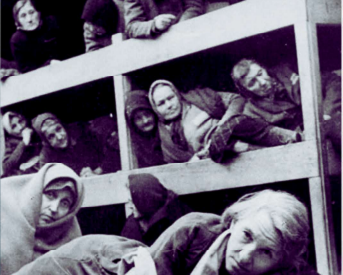
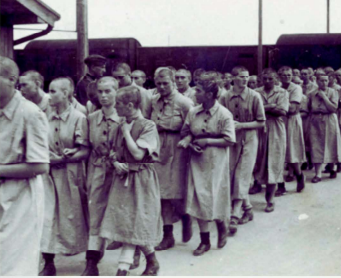
Weeks later, German soldiers selected sixty of the strongest girls to lay railroad tracks at a nearby camp called Budy; Lonka and Janina were among them. The female guards, known as Kapos, ruled through cruelty. One day, Lonka quietly began to clean a Kapo leader's shoes. The woman looked down and said, "I like you," and allowed Lonka to work indoors while Janina was forced outside. After two months, only a handful of the sixty girls were still alive, but both sisters survived.
The sisters were later sent back to Birkenau, where conditions had worsened. Late that fall, the Germans announced that they needed women to work in an ammunition factory. Even though the camp was under quarantine at the time, Lonka snuck out to tell an SS officer that she had experience assembling radios. The officer told her to submit her number and her sister's number. When her Kapo leader found out, she beat Lonka and screamed, "you are not going out through the door. You are going through the chimney!". But the next morning, Lonka and Janina' numbers were called and they were moved to Auschwitz.
In Auschwitz, Lonka worked on an assembly line making grenades. She sat beside women like Erika, a strict Kapo, and Selena Rubinstein, a survivor of the Warsaw Ghetto who had once hidden in the sewers.
They whispered stories to each other to stay alive inside. Janina, always the optimist, would steel potato peels and bits of bread for her sister and declared that some day, they would reach America.
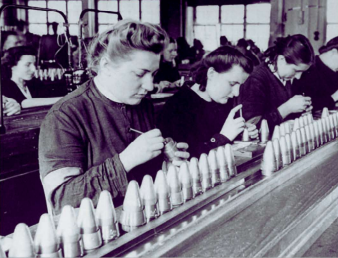
One day, the prisoners learned of a secret uprising in the factory. Girls had been smuggling gunpowder to sabotage the Germans. When they were caught, the entire camp was forced to watch them hang. Lonka never forgot that moment. From 1943 to 1945, the sisters endured unbearable hardship. Through every freezing morning and every beating, they held on to one promise. Stay alive, together.
THE COURAGE TO BEGIN AGAIN
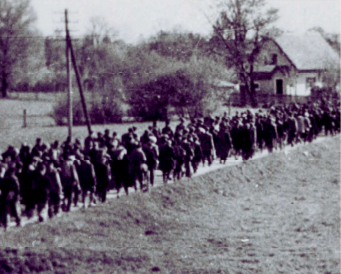
When the war ended, the sisters searched across Poland for family. They soon learned the heartbreaking truth that their parents had not survived. Their mother died in a ghetto fire, and their father died of typhus. Even in their grief, they kept moving forward.
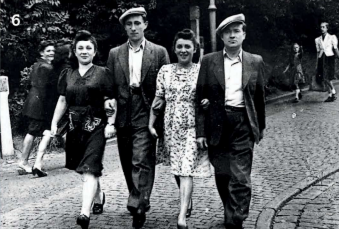
They returned to southern Poland and opened a small grocery store. There, Lonka reconnected with a woman she had known in the camps who remembered her promise: "If we ever get out of here, I will introduce you to my brother." She kept that promise and introduced Lonka to Henryk, a fellow survivor and soldier who, as Lonka later recalled, "looked like a general in his uniform."
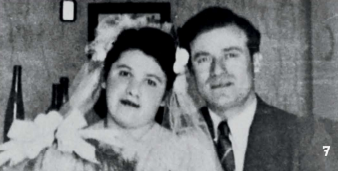
Afterward, Henryk took over a former German shoe shop, and the couple registered with an organization that helped survivors relocate. Soon, they traveled through Czechoslovakia and Austria and reached Germany on the last transport of 1946. From 1947 to 1949, they lived in a displaced persons camp near Stuttgart, Germany, where their son Abram was born. In 1949, the Jewish Federation sponsored their move to the United States.
They arrived in Belleville, Illinois, were placed in a hotel, and even appeared on the front page of the local newspaper. They did not know English, but Lonka proudly remembered that the first word she learned was "chicken."
In 1946, Janina arranged a small wedding for her sister using items from their store and a simple chuppa they made themselves.
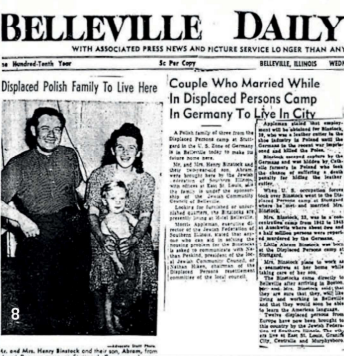
Facing continued antisemitism in Illinois, they reached out to one of Henryk’s cousins in Cleveland, Ohio, who had once sent money to relatives in the displaced persons camps. He welcomed them, and soon Lonka and Henryk, now known as Lilly and Henry, opened a shoe repair store and began their new life. Janina, later called Jean, married her husband Irving and settled in Brooklyn.
When asked why she thinks she survived, Lilly would often say, "I was just lucky," before adding, "we were young, we had to be strong. We were fighters." Even she sometimes found it hard to believe she lived through it all. For many years she hid her tattooed number and did not speak of her past, but when she heard people denying the Holocaust, she chose to tell her story. Survivors, she said, learned how to handle themselves. When they could not find work, they built their own future. Lilly shared her story so the world would remember, and because her greatest hope was simple and powerful: that people would learn from the past and that there would be peace someday.