

This op-ed was originally published on ejewishphilanthropy.com
Oct. 7 exposed a gap in Holocaust education that we must fix
By Bari Rogoff • October 13, 2026
For decades, Holocaust education in the U.S. has typically treated antisemitism as a sealed chapter beginning in 1933 with the rise of Hitler and ending in 1945 with the defeat of Nazi Germany. The lessons of this dark period have been taught as universal truths: Be kind. Show empathy. Stand up for others. We have Holocaust museums and state mandates for Holocaust education, eighth-grade units on The Diary of Anne Frank and Elie Wiesel’s Night. “Never Again” became a slogan for defending the vulnerable from humanity’s worst impulses.
Then came Oct. 7, 2023, the deadliest day for Jews since the Holocaust. It was the latest in a long line of genocidal attempts to erase Jewish life from the map. What made it different was watching it happen in real time, and watching the world’s response in real time, too.

Protesters hold a banner reading 'Globalize the Student Intifada' during a demonstration outside the ICE building in Washington on March 15, 2025.
We watched groups celebrate a massacre of Jews before the dead bodies were even counted. We watched posters of kidnapped Jewish babies torn down in broad daylight. We watched women’s rights groups stay silent on mass rape, with some even questioning if it happened. We watched Jewish businesses vandalized, Jewish preschools double their security and global Jewry demonized.
And we watched as students on college campuses embraced terrorist chants calling to globalize the killing of Jews. These same students, many of whom had been taught about the Holocaust in school and self-identified as upstanders for social justice, were unable to recognize antisemitism when it was right in front of them.
That was the moment when I saw an unsettling gap: We taught a generation about the six million Jews murdered in the Holocaust without teaching them how to recognize the pernicious type of hate that caused it.
We need to teach students how to recognize antisemitism, not only as it appeared in Nazi Germany, but as it has mutated and resurfaced across centuries. We need to teach how this ancient hatred reinvents itself in every era, often presenting itself as a righteous cause and repackaging itself in the language of the day. If we teach students only what antisemitism looked like during the Third Reich, we leave them unprepared to recognize what it looks like now.
Recognizing antisemitism also requires understanding the people it targets. Students rarely learn that Jewish history stretches back thousands of years before the Holocaust to regions beyond Europe, or about the culture, traditions and contributions Jews have made to the societies of which they’ve been part. Most schools omit Jewish American Heritage Month in their long list of celebrations, leaving students to learn about Jews through black and white pictures from World War II. We must introduce students to the totality of Jewish peoplehood, not reduce Jews to victims in a faraway time and place.
We’ve also been teaching students about Jews who were killed without introducing them to living ones. That is another gap we need to fill. Living Links, a national nonprofit, empowers descendants of Holocaust survivors to carry forward family testimony in a way that keeps the lessons of the Holocaust relevant and resonant. By sharing personal stories in classrooms and communities, descendants bring Jewish peoplehood to life, reveal the devastating consequences of antisemitism and inspire the next generation to break this dangerous pattern for good.
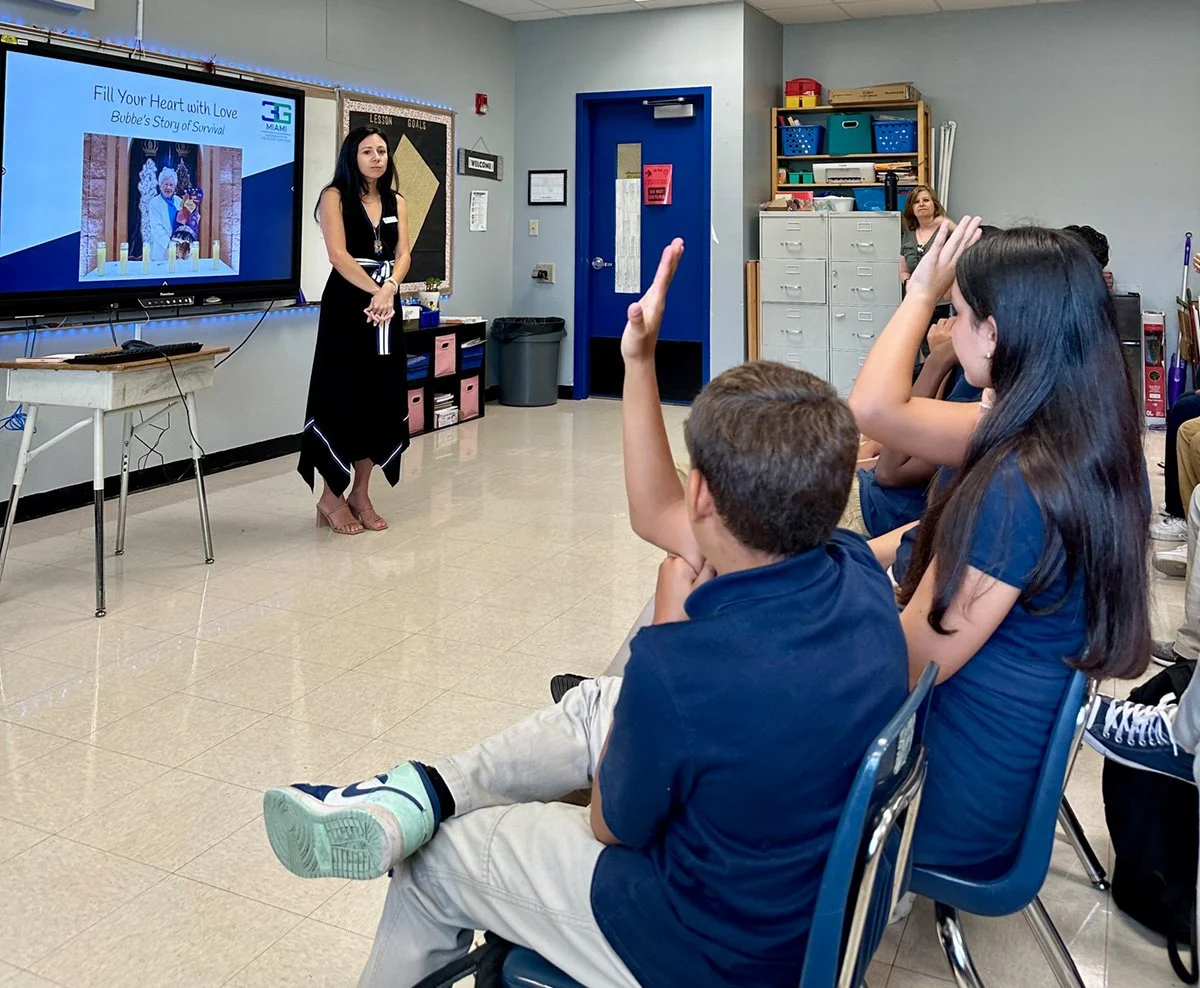
Jen Weisfisch of 3GMiami, a Living Links affiliate, shares her grandmother's story with students
When a descendant walks into a classroom, something shifts. Students see a real and relatable human being and the people behind the history: their names, relationships, traditions, values, losses, and legacies. As one middle-school student shared, “It’s not just history in a textbook — it feels personal.” By humanizing history, students stop reciting facts and start asking questions, engaging in critical thinking and meaningful dialogue. They connect the dots on their own, because a living person is standing in the gap.
My grandparents survived the unthinkable, and I understood early that carrying their legacy was not just personal, but a moral and civic obligation. The events of Oct. 7 and their aftermath made that obligation urgent.
Survivors like my Grandpa Barry, whose entire family was brutally murdered solely for being Jewish, understood the importance of the Jewish State of Israel as their only place of refuge. For many, it was the only option, and that certainty became home. Half of all Holocaust survivors alive today live in Israel. That fact speaks louder than any argument could, and it’s at the heart of why Zionism is woven into Jewish identity.
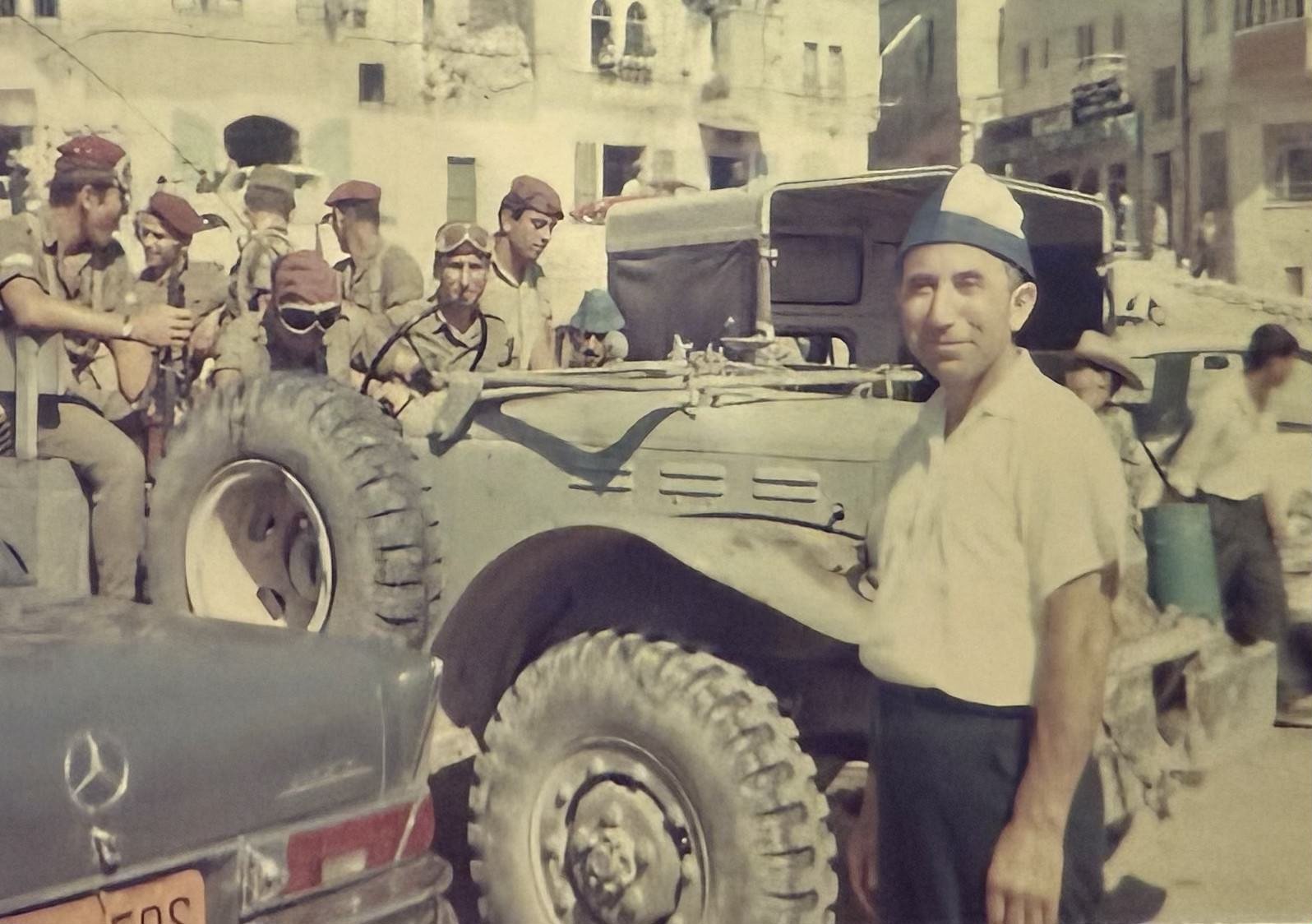
Author Bari Rogoff's grandfather Barry Hochman during his first visit to Israel
Holocaust survivors gave us testimony with powerful lessons for all humanity, and it is up to us to make sure those lessons are taught in ways that can shape a better future.
That starts with a choice. Let’s teach the full story of who Jews are and teach antisemitism as a living subject, with roots long before the Holocaust and realities just as frightening today. Bring living Jews into the room, especially the descendants keeping testimony and continuity alive, and measure success by whether a student can recognize and counter hate today while inspiring them to carry their own history forward, connect more deeply with their own family and become the kind of upstander who respects everyone’s story, not just their own.
“Never Again” was a promise. Now it’s ours to keep.
Bari Rogoff is the CEO of Living Links and the granddaughter of two Holocaust survivors.